What a full tank does to the drain field
A septic tank is a settling chamber. Heavy solids drop to the floor as sludge, grease and light material rise into a scum layer, and the clearer water in the middle is what flows out toward the drain field. Pumping keeps that middle zone wide enough to do its job.
When a tank is left too long, the sludge and the scum grow toward the outlet. Solids begin to travel out with the water and clog the soil of the drain field. The signs a homeowner notices are slow drains, gurgling in the pipes, an odour near the tank, or ground over the field that stays soggy while the rest of the yard dries out.
Those signs are the moment to call, not the moment to wait. Jones Septic works Tomball and north Houston seven days a week, 7am to 7pm, and a call to (281) 351-5702 gets you a free estimate.
How a pump out runs with the lid open
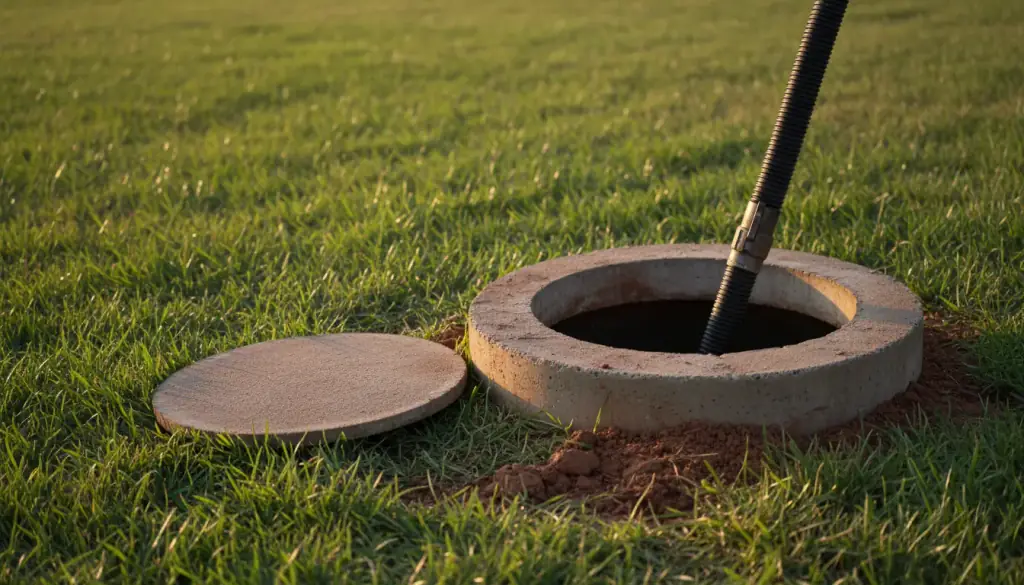
The driver finds the tank and uncovers the lid, then opens it before anything is pumped. That is the moment to look: how high the scum sits, how deep the sludge is, and whether the water level is where it should be. If you are home, the driver walks you through what is in front of you.
The hose goes down through the riser. The liquid comes out first, and the crust and sludge are broken up as the tank empties so the heavy layer leaves with the rest instead of staying on the floor. With the tank down, the inlet and outlet baffles get a look, because a broken or missing baffle is far easier to spot while the tank is empty.
Once the tank is empty, you are shown the inside of it. Nothing about the job sits behind a closed lid, and nobody has to take our word for it.
After the truck leaves: the lid, the flushing, the next call
The lid goes back on and the hose comes off the lawn. If something needs attention, such as a cracked lid or a damaged baffle, you hear about it in plain words before you decide anything.
A pumped tank works best when what goes into it is mostly wastewater and toilet paper. Wipes, cooking grease, paint, solvents and coffee grounds do not belong down the drain. They build the layers back up faster or harm the bacteria that do the work in the tank.
Keep an eye on the same signs as before: slow drains, odours, wet patches over the field. If you see them, call (281) 351-5702, any day from 7am to 7pm. A full tank caught early is a far smaller problem than a ruined drain field.