Why an aerobic septic system has three tanks and why all of them get cleaned
If your yard has a control panel on a post and a pop-up spray head, you have an aerobic system, and it needs more than a conventional septic tank does.
October 13, 2026 · 4 min read
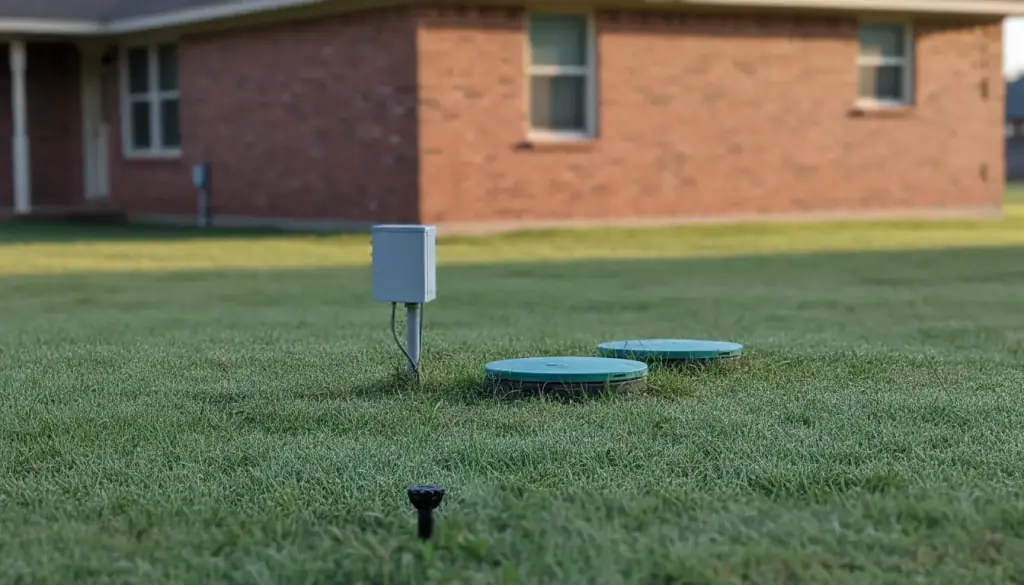
A conventional septic tank is one box with a drain field behind it. An aerobic system is a small treatment plant in your back yard. It has more than one tank, a motor, an alarm and usually spray heads where the treated water goes back to the lawn. People who move into a house with one often have no idea what is down there, and the first time they hear about it is when the alarm goes off. This is how it works and why every tank in it gets cleaned.
Why aerobic
The word refers to oxygen. In a conventional tank, the bacteria that break down waste live without air, and they work slowly. In an aerobic system, an air pump bubbles oxygen through the wastewater, and a different set of bacteria, ones that need oxygen, do the work much faster. The result is cleaner water leaving the system. That is why aerobic systems are often used where the soil doesn't absorb water well, which describes plenty of Gulf Coast clay.
Tank one: the trash tank
The first stage is called the trash tank or pretreatment tank. It works like a small conventional septic tank. Wastewater from the house comes in, solids settle to the bottom and the grease and scum float to the top. Its job is to catch the heavy material before it reaches the parts of the system that aren't built for it. It fills with sludge over time, exactly as a conventional tank does.
Tank two: the aeration chamber
The middle stage is where the treatment happens. An aerator, driven by a compressor or a motor, pushes air into the liquid, and the oxygen-loving bacteria feed on what is dissolved in it. When it is working, the chamber looks and sounds active: you can hear the air, and you can see the water moving. If the chamber goes still and quiet, the aerator may have stopped, and the bacteria will start to die off from lack of air.
Tank three: the pump and clarifier tank
In the last stage, the liquid sits still so any remaining particles can settle out. Many systems also have a disinfection step here before the water goes out. What yours uses depends on the make of the system. A pump in this tank then sends the finished water out to the spray heads or other discharge, and a float switch in the tank tells the system when to run. If solids make it this far, they can clog the pump, the float and the spray heads.
Why all three get cleaned
Each tank collects something different, and a problem in one becomes a problem in the next. A trash tank that is full of sludge sends solids into the aeration chamber. An aeration chamber loaded with solids uses up its oxygen on sludge instead of treating water. A clarifier tank with a buildup sends those solids to the spray heads. Cleaning only the first tank treats the symptom you can see and leaves the others to catch up.
It also helps to have someone look at each tank while it is open. The aerator, the float, the pump and the lines between tanks are all easier to check when the tank is empty and the lid is off. That is the idea behind the customer review that stuck in our minds: David J. wrote that the driver "explained everything about my aerobic before cleaning all 3 tanks and showed me the job when completed." Walking an owner through the system is as useful as the pumping.
- The alarm light on the control panel is on, or the alarm buzzer is sounding.
- The aerator is silent when it should be running.
- The spray heads are clogged, leaking at the base, or leaving wet, soggy ground.
- A sour or sewage smell near the tanks that wasn't there before.
- Drains in the house are slow, which can mean the first tank is full.
- You can't recall when any of the tanks were last cleaned.
What owners can watch themselves
You can check a few things without any tools. Look at the control panel now and then for the alarm light. Listen for the aerator when you're near the tanks. Keep the lids and the spray heads clear of overgrown grass, mulch and anything stacked on top of them. If you mow, aim the clippings away from the heads. A head that is buried or blocked can't spread water the way it was designed to.
Maintenance rules vary
Many aerobic systems are tied to a maintenance arrangement, and what yours requires depends on the system and where you live. For anything about required service or inspections, check with your county or the system's maintenance provider. A tank cleaner can empty and inspect the tanks and tell you what he sees, but the schedule you must keep comes from them.
If you have an aerobic system around Tomball or north Houston and aren't sure what condition it's in, call Jones Septic Tank Cleaning at (281) 351-5702. Someone answers seven days a week, 7am to 7pm, and estimates are free.
Jones Septic Tank Cleaning, (281) 351-5702
Call (281) 351-5702More articles
Signs your septic tank is due for a pump-out, and what each one means underground
A septic tank rarely complains until it is already overloaded, but the warning signs are specific and easy to read once you know what is behind them.
What happens during a septic pump-out, from the lid to the empty tank
A good pump-out is explained before it starts and shown to you when it's finished, and here is what sits between those two moments.