Signs your septic tank is due for a pump-out, and what each one means underground
A septic tank rarely complains until it is already overloaded, but the warning signs are specific and easy to read once you know what is behind them.
October 13, 2026 · 4 min read
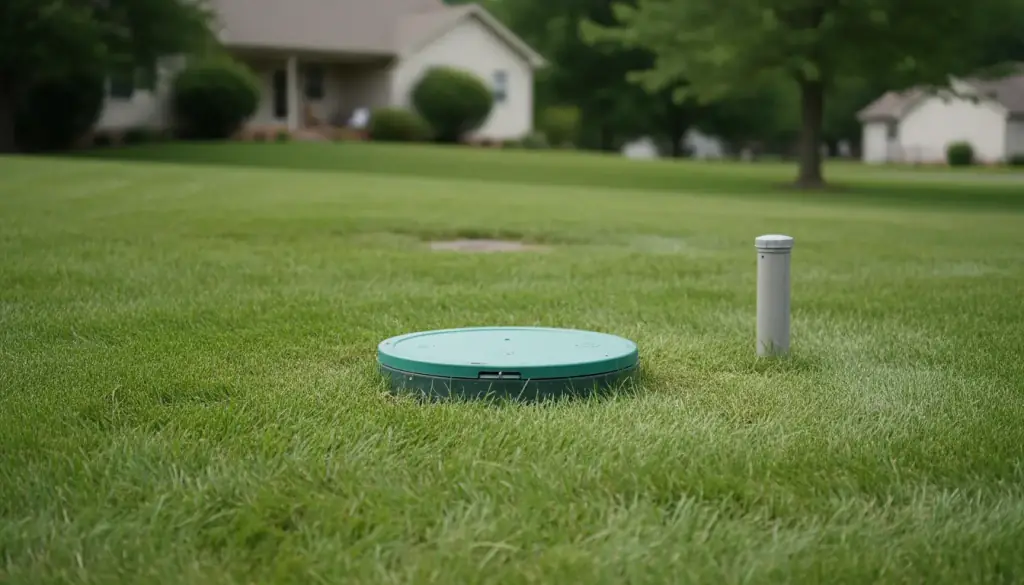
Most septic tanks don't announce themselves. They sit under the lawn, out of sight, and do their job quietly for years. When that stops, the signs show up in the house and in the yard, and each one has a specific cause underneath. Knowing what is behind the sign tells you how urgent it is and what to do next.
What is happening down there
A conventional septic tank is a buried box of concrete, fiberglass or plastic. Wastewater from the house flows in one end and sits. Heavy solids sink and form a sludge layer on the bottom. Fats, grease and light material float and form a scum layer on top. The clearer water between the two flows out the far end through an outlet pipe and into the drain field, where the soil finishes the job. Baffles or a filter at the inlet and outlet keep the scum and sludge from following the water out.
That design only works while there is room in the middle for the water to sit still. Every year the sludge gets deeper and the scum gets thicker. A pump-out resets the tank. Everything below is what it looks like when those two layers have squeezed the water out of its room.
Slow drains throughout the house
One slow sink is usually a clog in that fixture's own trap, and a plunger or a snake handles it. When every drain is slow at the same time, tubs, sinks, laundry and toilets together, the problem is further down the line. A tank that is nearly full of solids can't take wastewater quickly, so the water backs up toward the house. If the toilets flush weakly and the shower drains slowly on the same day, think tank before you think plunger.
Gurgling in the plumbing
Gurgling is air being pushed through water. When the tank or the outlet is bogged down, wastewater moves sluggishly through pipes that are supposed to be mostly air, and the air has to bubble past it. A gurgle every time water runs somewhere else in the house is worth a phone call.
Odors inside and outside
A healthy septic system is close to odorless from the yard. A sewage smell near the tank lid or over the drain field means gas is escaping from somewhere it shouldn't, often because the tank is overloaded or the field is struggling. A sewage smell from the drains inside can also come from a dry trap in a rarely used bathroom or a vent problem, so pour water down the unused drain first. If the smell is still there and it comes with slow drains, the tank is the likely cause.
Wet, spongy or unusually green ground
Walk the yard over the tank and the drain field. A strip of grass that is greener and thicker than the rest of the lawn during a dry spell is being fed by something, and that something is usually wastewater that isn't being absorbed the way it should. Standing water or soft, spongy soil over the field is worse. It means effluent is reaching the surface.
Sewage backing up
A backup in the lowest tub, shower or floor drain is the late sign. By this point the tank has no room left, and the house is the only place the water can go. Stop running water, don't flush, and call. Every gallon you run is a gallon that ends up on the floor.
- Every drain in the house runs slow at the same time.
- Gurgling in the pipes when water runs somewhere else in the house.
- Sewage odor near the tank lid, the drain field or the drains.
- Grass over the field that stays greener than the rest of the yard in dry weather.
- Soft, wet or sunken ground over the tank or the field.
- Water backing up in the lowest tub, shower or floor drain.
- No one can remember the last pump-out, or more people live in the house than when the tank was last cleaned.
A tank can be due with no signs at all
Waiting for symptoms means waiting for damage. Solids that reach the outlet don't stay in the tank. They travel into the drain field, where they clog the soil that absorbs the water, and that is the part of the system that is hard to repair. A routine pump-out is a small job by comparison, which is why a tank is better cleaned on a schedule than on an emergency.
How often is often enough
There is no single number that fits every house. Tank size, the number of people in the home, how much water the household uses, and whether there is a garbage disposal all change how quickly the layers build. If you bought the home and have no records, have the tank opened and looked at. For any schedule your system is required to follow, check with your county or the system's maintenance provider.
What to do when you see two or more
One sign is a reason to pay attention. Two or more together, especially slow drains plus wet ground, is a reason to schedule the tank. Products poured into the toilet won't remove years of sludge, so get the solids out of the tank instead.
If you're around Tomball or north Houston and any of this sounds familiar, call Jones Septic Tank Cleaning at (281) 351-5702. They answer seven days a week, 7am to 7pm, and estimates are free.
Jones Septic Tank Cleaning, (281) 351-5702
Call (281) 351-5702More articles
What happens during a septic pump-out, from the lid to the empty tank
A good pump-out is explained before it starts and shown to you when it's finished, and here is what sits between those two moments.
Why an aerobic septic system has three tanks and why all of them get cleaned
If your yard has a control panel on a post and a pop-up spray head, you have an aerobic system, and it needs more than a conventional septic tank does.