Septic systems after heavy rain: what a soaked drain field means and what to do
When the ground is already full of water, your septic system has nowhere to send its own, and a few small habits make a big difference.
October 13, 2026 · 4 min read
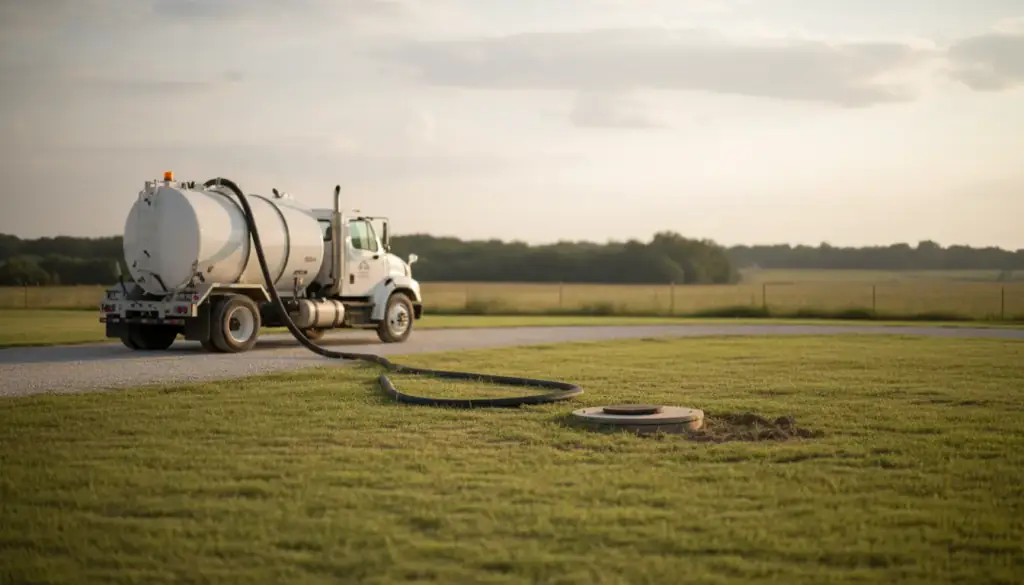
Along the Gulf Coast, heavy rain isn't unusual, and neither are the days afterward when the yard stays soggy. For a house on a septic system, that soggy ground matters more than it does for a house on city sewer. The drain field depends on the soil around it to absorb water, and when the soil is already full, that job gets harder. Here is what is going on and what to do about it.
How a drain field handles water
The water leaving your septic tank flows into a network of pipes or chambers buried in the yard. From there it seeps into the surrounding soil, where it is filtered and absorbed. The soil has only so much room. In clay-heavy ground, common across north Houston and around Tomball, water moves through slowly even in dry weather. After days of rain, the soil can be saturated, which means there is nowhere for the field to send its water.
The tank doesn't stop receiving water just because the field is full. Showers, dishes and laundry keep coming. The water level in the tank rises, and if it rises far enough, you get slow drains, gurgling and in the worst case backups in the house.
What a wet system looks like
The signs of a saturated field look like the signs of a failing one. Slow drains throughout the house, wet or spongy ground over the field, a sewage smell in the yard. The difference is timing. If these show up during or just after a long rain and fade as the ground dries, the system was overwhelmed by the weather. If they stay for days after the ground around them has dried out, something else is going on, and the tank and field should be checked.
What to do while the ground is soaked
The goal is to put as little water into the system as you can until the yard dries. Small changes add up.
- Spread out the laundry. Do one or two loads a day instead of five on a weekend.
- Take shorter showers, and skip the long soaks in the tub for a few days.
- Run the dishwasher only when it's full.
- Fix running toilets and dripping faucets, which add water around the clock.
- Make sure gutters and downspouts discharge well away from the tank and the field.
- Keep sump pump and AC condensate lines pointed away from the field.
What to leave alone
Stay off the drain field with vehicles, mowers and heavy equipment while the ground is soft. Weight on wet soil packs it down and squeezes out the air pockets the soil needs to absorb water. Don't water the lawn over the field when it has been raining. Don't add fill, plant trees or build anything over the tank or the lines. And don't open the tank lid to look in. Open lids let rainwater and runoff in, and a tank is a hazardous place to lean over.
Should you pump during a wet spell
It depends. Pumping a tank that is full and backing up into the house is the right call in any weather, because the alternative is sewage on the floor. Pumping a tank that is fine just because the ground is wet isn't a fix for a saturated field, and it can be a problem of its own. When groundwater is high, an empty tank can be pushed upward by the water around it. Ask the person doing the pumping what they see on site and what they recommend. They have seen how your yard behaves.
Aerobic systems after rain
If you have an aerobic system, watch the control panel. A high-water condition in the pump tank can trip the alarm, and the alarm is telling you the system is struggling. Cut back on water use and call if it doesn't clear. Make sure the lids are secured and that surface water isn't running toward the tanks or collecting around the risers. Spray heads that sit in standing water or in ground that stays saturated aren't getting rid of anything, so keep an eye on them.
When to call
Call if sewage is backing up into the house, if the alarm won't clear, if the wet spot over the field hasn't dried several days after the rain stopped, or if there is a strong sewage smell in the yard. If you aren't sure, call anyway and describe what you see. A short conversation is better than guessing. For questions about what is required for your type of system after a flood or heavy storm, check with your county or the system's maintenance provider.
If your system is struggling after a storm near Tomball or north Houston, call Jones Septic Tank Cleaning at (281) 351-5702, any day, 7am to 7pm. Estimates are free.
Jones Septic Tank Cleaning, (281) 351-5702
Call (281) 351-5702More articles
Signs your septic tank is due for a pump-out, and what each one means underground
A septic tank rarely complains until it is already overloaded, but the warning signs are specific and easy to read once you know what is behind them.
What happens during a septic pump-out, from the lid to the empty tank
A good pump-out is explained before it starts and shown to you when it's finished, and here is what sits between those two moments.